
Case
Haus
Reimagining the Modern Office Through Feeling
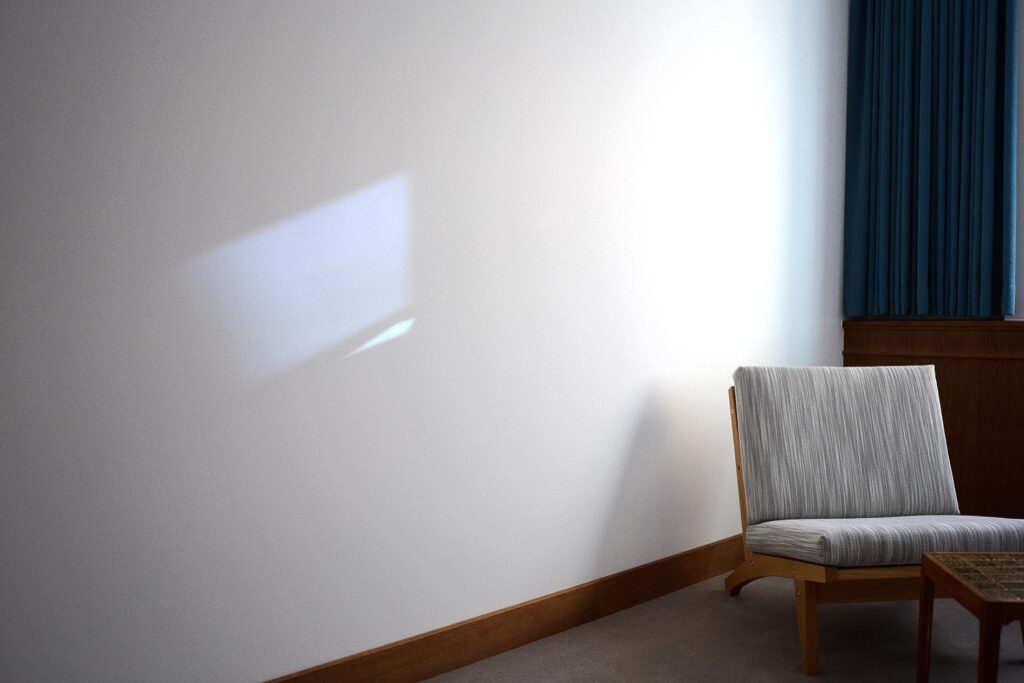
People don’t return to offices for the coffee. They return for a feeling. So when I was brought in to reinvent a six-storey yellow brick building from the 1960s—tucked into the pulse of central Copenhagen—the mission was clear: make the workplace feel like somewhere you’d choose to be. We leaned into the era. Teak wood. High-loop carpets.
Upholstered forms and heavy curtains that hush the outside world. Everything grounded in a palette that says: you’ve arrived. It’s familiar, but elevated. Comfortable, without losing its edge. The kind of space where a meeting turns into a conversation, and a hallway becomes a runway. Contemporary art brings the tension.
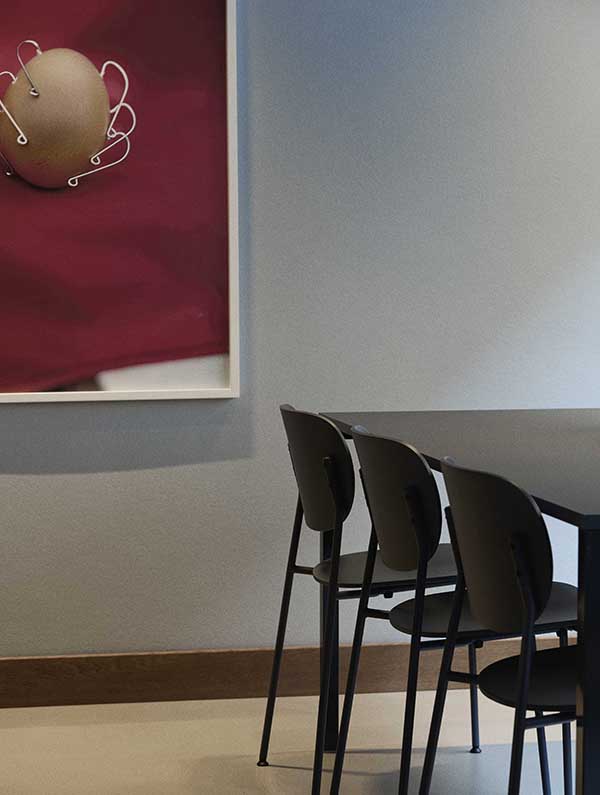
A jolt of modernity in rooms wrapped in mid-century calm. It doesn’t just decorate—it disrupts, reminds, reframes. Because this isn’t nostalgia. It’s strategy. And good strategy always starts with how a place makes you feel.


Designing Emotion Into the Workplace
The reframing of this mid-century building demanded more than just architectural respect—it called for emotional boldness. Colour became a key agent of change.
We leaned into an unexpected palette: mean mustard, deep mud brown, and hits of turquoise that hum with energy. Not safe. Not neutral. But undeniably alive. Classic Knoll sofas in textured tweed anchor the space with familiar formality, while leather-wrapped meeting tables bring warmth and tactility to moments of decision-making. Around them, a curated mix of second-hand lights and objects tells quieter stories—pieces with history that soften the sharp edges and gently slow the pace. This wasn’t about designing a showpiece.
It was about crafting a space that whispers “stay” instead of shouting “perform.” A workplace less defined by obligation, more by invitation. Somewhere that works because it feels right first—and good strategy always begins there.
When Books Become Architecture
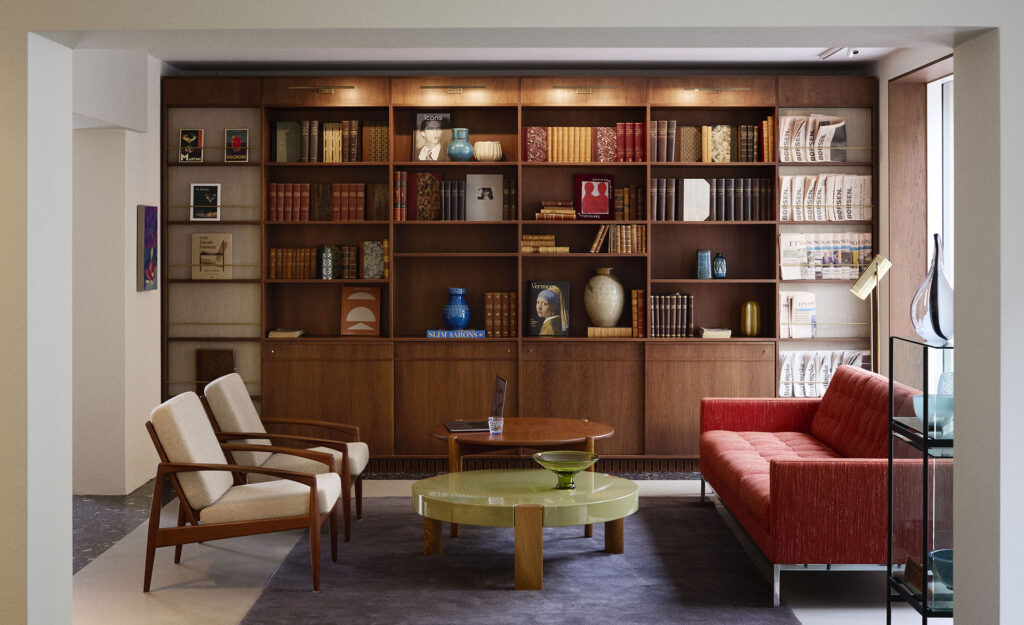
Another layer of this project was all about the feeling only books can bring. The quiet weight of print. The comfort of leather-bound spines and dog-eared pages. Knowledge, both old and new, lining the walls like a kind of soft architecture.
In every meeting room and shared space, bookshelves wrap the room—floor to ceiling. Not as decoration, but as atmosphere. A steady presence that grounds conversations, slows the tempo, and invites reflection. Alongside the art, they play in harmony: contemporary tension meets literary calm.
This wasn’t about mimicking a library. It was about capturing its emotional gravity. Creating a space where ideas stretch out, where curiosity leads, and where the written word subtly shapes the way we work.
Because when work feels like part of a bigger cultural rhythm, it’s not just productive—it’s meaningful.

